

2026-10-14
Back to Basics: Why 5-Step Retrospectives Still Win
I’m not a theory guy. I like exploring, doing things my way. But whenever I start a new mission or join a new team, I always take the opportunity to restart from the basics. 💡
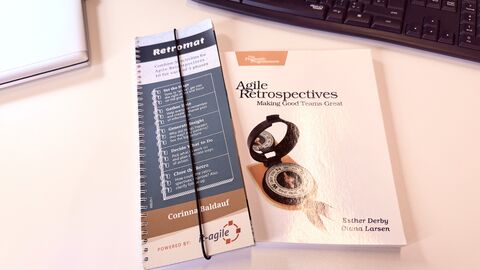
While most of the Retrospectives I’ve facilitated in the last 2 years were rather vibe-based (if not half-baked, to be honest), yesterday for the first Retrospective with my team at Mercedes-Benz, I chose to dive back into Agile Retrospectives by Esther Derby and Diana Larsen, and this great Retromat tool by Corinna Baldauf.
Followed each of the 5 steps of a retrospective and ended up in 60 minutes with a short list of concrete improvements and great feedback from the participants. 🤷🏻♂️
Sticking to the basics is sometimes still the best option 😄
Experienced Scrum Masters around here, do you still (occasionally) follow the 5 steps?

27

18
View on


TOP COMMENTS
I always follow the five steps for a retrospective, I do however not use different exercises for each of the steps. I usually do step 2 & 3 in a combined exercise (gather data & generate insights). I also draw inspiration from Sam Kaner's Diamond of Participatory Decision-Making which maps nicely to the 5 steps and adds a different perspective (the cognitive shift). … more
Astrid
I found this book so valuable that I decided to buy the second version when it came out. Many more ideas that could be inserted in a retro or other workshops. There's probably only one thing on which I have a different opinion, which is that icebreakers need to bring value per se and cannot be just for fun (I think I read that somewhere). When my team wants a short and fun icebreaker, I give it to them. But I guess everyone will have their own opinion about that 😁 … more
Guillaume